When you’ve been teaching your baby to read using the whole word method, it can feel tricky to know when to introduce phonics. It can also be difficult to determine how to begin. Do you wait until they’re older? Do you stop showing whole words and switch to letters? The answer, in our experience, is: you don’t have to choose.
Phonics isn’t a replacement for whole word reading. It’s a natural next layer—especially when introduced at the right time and in the right way.
Let me share what this looked like for us across several languages.
🔡 How Our Journey Began
Around 16 months, we were already pointing out letters casually. We noticed patterns in the environment—like spotting the same letters on signs or toys. We weren’t drilling anything, just noticing, naming, and talking.
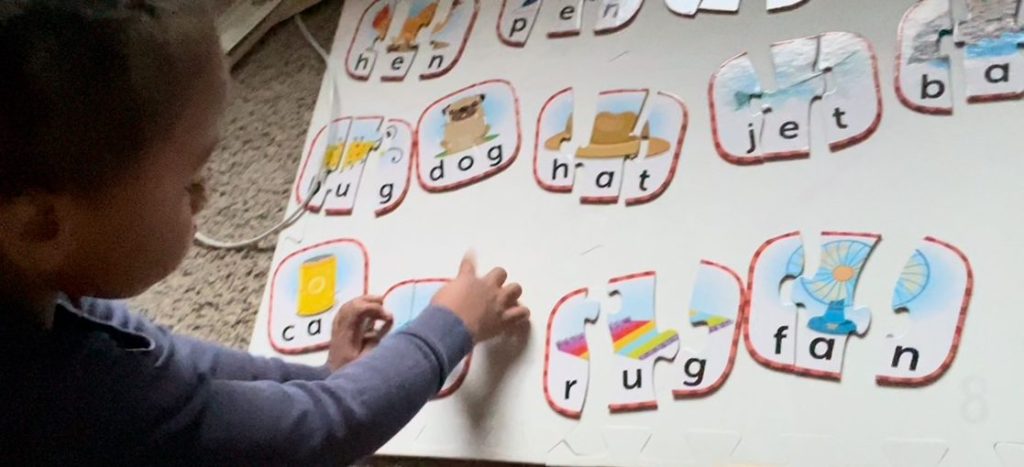
By 19 months, we started playing with letter sounds in English. We’d stretch out the beginning sound of a word. We grouped similar-sounding words together. We read short sets of words that shared the same phonetic patterns. (Think “cat, hat, mat.”) But because he already had strong whole word recognition, we kept it playful and didn’t overly simplify our input.
🇷🇺 Phonics in Russian
In Russian, we leaned much more heavily on phonics—but later, around 2.5 years old, when I started noticing that he wasn’t as strong in Cyrillic as in Roman writing system. At that point, we used kindergarten-level textbooks. We broke down words he already knew. We explored the structure of the language together. Russian phonics was much more step-by-step for us. The foundation from English helped. It gave us the confidence to explore another decoding system.
🇪🇸 Spanish Came Naturally
Since my son already knew many letter sounds from English, Spanish phonics came quite effortlessly. Spanish is highly phonetic, and the consistency in pronunciation meant that once he understood the sounds, decoding was simple. We didn’t need a formal plan—it unfolded organically through books, songs, and everyday interactions.
🇯🇵🇸🇦 Gentle Exposure in Japanese and Arabic
Japanese has been more about exposure for us. We keep it gentle and fun—think: listening to songs, looking at picture books, and playing with simple hiragana. We also looked for patterns in Kanji, and that’s not phonics, but still…hidden meaning through pictograms.
And Arabic? It’s always been just for fun and variety. We occasionally explore the alphabet and play with sounds. Since it’s not a spoken language in our home, I keep my expectations in check. I simply follow his interest.
🔁 So How Do You Transition from Whole Words to Phonics?
That brings us back to what I share so often on Instagram:
Around 2 years old, most children are developmentally ready to begin noticing how words work. They start showing signs of logical thinking. They enjoy taking things apart and putting them together again. And they’re ready to start hearing and experimenting with the building blocks of language—sounds.
But here’s what I believe is key: don’t stop the whole word input. Keep going through your reading program, add new and more complex words, and connect them to rich storybook experiences. Phonics is something you layer on top—not something you switch to.
You can introduce:
- Letter sounds in daily conversation
- Simple blending games
- Rhyming and sound-matching play
- Decoding practice using familiar words
And you don’t need a program. If you can read and understand the sounds in your language, you can teach phonics. What you do need is continuous, meaningful input and an engaged presence.
🌍 What About Language Differences?
If you’re teaching in a phonetic language like Spanish, Italian, or Russian, you’ll find that decoding is fairly consistent. You can start with letter sounds and build from there.
If your language has irregular spelling rules (like English or French), don’t stress over exceptions right now. Save that for the 4–5 year old stage. For now, focus on consistent patterns that help your child feel confident and successful.
💬 Tell Me About Your Journey
Are you currently layering phonics into your routine? What language(s) are you working with? Each one brings unique strengths—and challenges. I’d love to hear where you are in your reading journey and help guide you through this exciting next step.
Let’s keep the conversation going!

